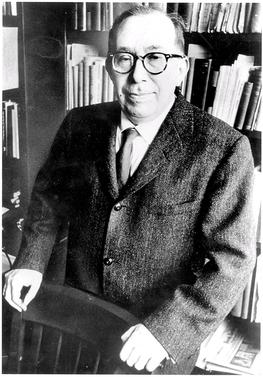
Sunday, December 16, 2012

Secret Teachings: Do Not Share this Blog with Anyone

The difference between the beginner and the philosopher (for the perfectly trained student of Plato is no one else but the genuine philosopher) is a difference not of degree but of kind.
Leo Strauss, The Rebirth of Classical Rationalism, p. 68

This is the question for philosophy, for democracy, for humanity. Strauss continues:
Now it is well known that, according to Plato, virtue is knowledge or science; therefore, the beginner is inferior to perfectly trained student of Plato not only intellectually, but also morally. That is to say, the morality of beginners has a basis essentially different from the basis on which morality of the philosopher rests: their virtue is not genuine virtue, but a vulgar or political virtue only, a virtue based not on insight, but on customs or laws.
This is where the question continues to. Finally it arrives at:
And there is a difference not of degree but of kind between truth and lie (or untruth). And what holds true for the difference between the esoteric and exoteric teaching; for Plato's exoteric teaching is identical with his "noble lies."
Strauss says the truth is not what the philosopher says, it is what he doesn't say, and that's why this is from an essay called "Exoteric Teaching," because it's actually about Esoteric Teaching, by someone who says he "can't be a philosopher," (and therefore we may assume he is one).

Modernity is "a problem" according to Strauss because it does not value the esoteric in philosophy, it does not give the philosopher a higher morality over the "uninitiated," it makes no such division of Being. It eliminates privilege and the concept of virtue.

Quantum Physics asserts that there are only divisions of degree, there are no divisions of "kind."

Advaita Vedanta, the Indian philosophy from which Platonism descends, asserts there are no divisions of kind, only of degree. There is truly no virtue, but since there is Unity, the True Knower is incapable of causing harm.

Since both empirical science and Indian mysticism, the most earnest investigations of the outer and the inner, respectively, ever conducted, which proceed from the absolute opposite poles of human endeavor, have finally arrived at the same conclusion, we might say that everyone is capable of knowing the truth and overcoming the impulse to harm others.

Virtue is then an illusion, but a necessary one (like money), and the concept of virtue fades away as one purges their sense of privilege over other beings. The Paramahamsa embraces everything, virtuous and vicious, but also accepts all Being under his protection and has no impulse to harm anything.

What if one understands the illusion of virtue, but does not purge their sense of privilege over others? What if one has merely a vertical enlightenment, but not a horizontal one? What does this person look like? He may be called "The Philosopher," by Plato's definition. 

The secret of Masonry, which seems to be inherently Platonic, according to Strauss in the same essay, is that:
All works, and therefore all good works, are "superfluous" insofar as the level of theoretical life, which is self-sufficient, is reached; and that the requirements of the lower are bound from time to time to conflict with, and to supersede in practice, the requirements of the higher. Consideration of that conflict is the ultimate reason why the "free-masons" (i.e., the wise or the men of contemplation) must conceal certain fundamental truths.
The second part of this disagrees even with Western Occultism, which is the life-blood of Masonry, which holds the tenant: "As below, so above. As above, so below," and therefore there can be no disjunction between morality upper and lower. This is described in The Kybalion, the compendium which reveals all the secrets of Alchemy, whose publication in the nearly 20th century reveals that if ever there were intellectual secrets that needed to be kept for reasons beyond Egoism, those days are behind us.

The "superfluous" nature of good works is explained by Vivekananda in his essay on Karma-yoga. The idea that we are storing up "treasures in heaven" is a useful image, but it is milk for babes, while the meat is for men. Is this a noble lie in the way that Plato lies?

The difference between the Platonic Lie and the Christly lie is this: Plato lied because he felt the fundamental truths were too painful and dangerous for the population. Christ lied, by speaking in parables, because all words are lies, merely signifiers of what lies beyond speech, for the "The Tao that can be told is not the Eternal Tao."

Lucretius put his materialist philosophy inside a poem, so that honey on the rim would make the wormwood of truth palatable. On the other end of the spectrum from materialism, the passion of Christ is a savage event which covers the wondrous transcendental pleasure that comes from selfless devotion to the truth -- it is wormwood which covers the honey, for people have a mean streak and won't eat bread unless you tell them its made from the crushed bones of the innocent.

The Ramakrishna spoke of a sage who promised his would-be followers two gems and a bowl of soup if they followed him. He lied to them, and did not given them two gems and a bowl of soup. He did not lie out of neurotic "concern for them," nor to protect his city. He lied because the bowl of soup he gave them was consciousness of the infinite ocean of the Absolute, and the two gems were their eyes now filled with unending wonder. These lie beyond all words, and so all words are lies when they are offered as reality. Also, people are more interested in tomato bisque and diamonds than they are in truth, until they try it.

Modernity is not a "problem" because history, as a discrete progression of stages, is an illusion. Modernity is only close to being a problem when we reenforce the idea that we are privated from those who valued the transcendent. They are here, and they are always here, for we are them.

But who valued the transcendent the most? Let's say: the ancients. Which ancients? The Greeks of course. Did they value it the most of all ancients? Did they make a concerted survey of the transcendent and reveal the various paths towards it? No, they did not actually do that, they spoke with much obscurity and much attention to holding onto the ephemeral and not the transcendent. Who did make such an investigation? The Indians. And did they find divisions in Being, the likes of which Plato and Strauss talk about? No they did not. But they have castes! They are the modern Indians, and not the ancients, if we are going to be discerning, we must be far more discerning than we have been.

If we say the Philosopher never had such a grounded understanding of Being as the Indians did, then should we not study the Swamis instead and abandon the Philosophers? Perhaps, but why should we submit to the Indians as our teachers? We are Americans, we are our own teachers (and this is indeed a profound place to begin our search for enlightenment, for it is likely where it will end at as well).

Unlike Plato, however, let us look at the place which comes before words. Let us start at a place far more fundamental than where Heidegger started, let us ask "who asks the originating question" without even asking this question -- let us listen to ourselves asking. Perhaps this place is even more at the beginning than where the author of the Gospel of John begins at, which places God at the same beginning as logos. So let us start even before we have a God. It would be starting before "the beginning," before time itself, and therefore not before time, but outside of time. Is this the Realm of the true-Self? Let us hear ourselves ask that to question unto... If we are to be philosophers, if we are to truly love wisdom, we cannot assume anything about wisdom -- and we certainly must not assume it starts, or ends, with words.

Monday, December 10, 2012

Pretty Flowers That Say What's Wrong With You

First of all, check this guy out:
Probably the most obscenely cute thing I've ever made in photoshop.
So what is this? Well, the different petals represent the 5 different personality aspects that the Big 5 test for. The opacity (or "see-thru-ness" for those with sex lives) of the stem represents the locus of control. Some nit-pickers may have noticed an irregularity between the personality aspects on the little flower label thing to the right and what the Big 5 tests for, as described in the last blog.

I switched "Neuroticism" for "Emotional Stability." There's precedent for this, Professor Wiki tell me, and all that's required is inverting the percentage that the test results render. All the other traits have ideal results in the 100 percentile, except Neuroticism is a negative trait, so you want to be towards the 0%. I really have no idea why they designed it like this, unless the goal of the Big 5 Test was to find psychological clones of Woody Allen. Well, look no further than me:


Here's what my results looked like when the website I used spit them out.

This website's background is Baby-puke-green, in case your results made you feel good about yourself.


You can see I wanted to find a better way to visualize the results from this test. I read these results and I think 90% on Openness, sweet! That's better than I ever got in a math class. Conscientiousness, 83%. Well, I don't even know what that really is so I won't sweat it. Extroversion, 86%... I feel like the fact that I'm blogging about this shows that I'm not in the 86th percentile for Extroversion-ism, but whatever. Agreeableness, 70%? Well, fuck you, test! And Neuroticism, 80%, not bad! Wait... shit. I have some mixed feelings, but a few moments later what I take away is... pretty much nothing.


I once heard that NASA uses analog gauges, or digitized versions of analog gauges like the one above, because it is easier to process spatial relationships than raw numbers. I'll take that as my excuse for getting a speeding ticket once in my mom's Prius which has a Speedo that looks like this:
Anyone who has driven a Prius knows how impressive this photo is.

So it seems sensical that we have a similar disconnect when interpreting raw information about ourselves, a subject which we are especially good at interpreting poorly. So here is my personality flower:


This, unlike the raw data, is shocking to me. One thing I'm certain of, anyone who has dated me will look right at that purple petal and say: "Yeah, that's him." I mean, this freaks me out, seeing how unbalanced the purple petal is compared to all the others. And then I realize that the tiny purple petal is precisely what's making me freak out about the tiny purple petal, and now I'm REALLY freaking out.

Here's my flower they are stacked against the "fully actualized personality" for comparison, that's when I really start feeling bad.  


Photo-shop-ographic proof that I am not perfect.
Nothing like the Buddha represented in a flower to make you realize how much you suck.

What keeps me calm is understanding that these Non-Cognitive Skills are completely malleable. They are not so fluid that these tests are meaningless, but there is supposedly a great deal of flux possible with these numbers. And the alteration of those numbers, represented by the changing size of those petals, would supposedly correlate with more success and contentment in my life. Well, we'll see. I will say I find this visualization useful. It's easier to manage your Neuroticism, IMO, if you can picture it as merely an under-Miracle-Gro'd flower petal instead of a Klonopin-craving depravity monster.


Let's check out the other flowers I made. These are a few of the kids I work with at a community center. These boys are between the ages of 12 and 17 and have been labelled "at-risk." Most of them have weapons, burglary or assault charges and take part in this program instead of going to juvenile detention.


This kid's Agreeableness, Conscientiousness, and Emotional Stability are all well under the 50% mark. So I have some mixed feelings when looking at this. The most unhelpful part of me says "so... I guess this means I'm a better person than him." That's not what this means. The whole idea of displaying these spectrums is to show that there is a fluidity to traits, and there is no orientation which suddenly makes one a "good," "bad," or "great" person. Also, these numbers refer to percentiles, based upon others who have taken the same survery, they are not attempts to "objectify" human goodness or anything like that.

What is more helpful to see when looking at this flower is potential. With so much room to grow in categories like Agreeableness and Conscientiousness, think how many doors can open for this kid that are now closed because he's kinda hard to get along with! Now, his Emotional Stability is also pretty low, but if you're paying attention you'll see that it's actually higher than mine. This is a trend:


This guy's Emotional Stability is over 3x mine. 
 

This dude blows me out of the water for E.S.! This could be a result of these kids not taking the test with the utmost sincerity. They're not dumb, and the questions that make you seem like a nervous punk kinda pop out at you (to which I say YES, I am a nervous punk), so maybe they're just trying to seem tough. But its also likely that they are just tougher than me, they have more "Grit" as Paul Tough calls it in his book:  "How Children Succeed: Grit, Curiosity, and the Hidden Power of Character". I think that's a very reasonable analysis of this limited data, actually.

As someone who has been privileged thus far in life (to put it mildly) you would think this might affect my personality. I easily acquired the traits of being  open and agreeable because everyone in my life seemed to be offering me things, nice, often iPod shaped things. All of the other kids tested, however, have lived very different lives. Not one of them was raised with two parents, many grew up hungry, all have seen violence in their community on a daily basis. Why WOULD they score highly in traits like Openness and Agreeableness? One might called this "closedness" a coping mechanism, but like all coping mechanisms it was developed to keep them alive.


It also doesn't hurt that I'm 22 and these kids are as young as 12. Time does give us a few gifts.

I've been looking at the data in other ways, but obviously this is a tiny sampling. The real goal is to have these data points over time. We'd like to see if our intervention program has any affect on them and in what ways. Here's something interesting though:

 
The Locus of Control Test and the Big 5 Test can both render percentage scores (though the Big 5 is truly a percentile, showing your place amongst other test takers not your score within raw data). This made it easy to take an average of the participants Big 5 score and plot it with their Locus of Control test to see if there were any interesting correlation. What this graph shows is, with one exception, the higher the amount of control they felt in their lives, the higher they scored on average in the different Big 5 Categories. And yes, I did adjust Neuroticism to be "Emotional Stability" so that you'd actually want a high score. This is just a correlation that fits a tiny sampling, but it does reenforce the obvious: help them feel more in control of themselves, of their life, of their destiny, and the rest might just take care of itself.

It does make me wonder, however, is anyone really in control? or is it just helpful to think so?

The Big 5 and Locuses -- Monster Movies or Personality Tests?

A few blogs back I was talking about giving personality tests to the "At-risk" Teens at the community center I work at. The results are in! Let me explain the tests before for those who are interested.

I gave them two tests. The first is called the "Big 5 Test." "Big 5" sounds more like a falsely advertised penis than a legit personality test to me, but I didn't go to school for Psychology.
What a Google search for "Big 5" renders, even with "Safe Search" set to off.
The Big 5 Test  
Tests for five personality traits:

Extroversion -- Agreeableness -- Openness -- Conscientiousness -- Neuroticism

Maybe there's a strange correlation between the "Big 5" Animals of Africa and these five personality traits! I'll let someone else crawl down that water buffalo hole. Well this test is called the "Big 5" because all known personality traits are thought to be subsumed under these five general categories. I did a tiny bit of research before deciding to give the kids this test. Here's the test I gave them.
Here's a picture that should stifle all of your skepticism.


Wikipedia talks about an old theory, called the "Lexical Hypothesis" that attempted to identify all the human traits in existence by flipping through the dictionary and scribbling down every adjective for human characteristics. I think there's a Sherlock Holmes story about this. Gordon Allport and H. S. Odbert undertook this quest, first proposed by Sir Francis Galton (sounds like a alias for Moriarty to me). Allport and Odbert (is there an Adult Swim show by that name?) found "17,953 personality-describing words." This list was soon paired down to the manageable number of 4,504. Were they even trying?!!

Long story short, people began doing psychology on humans instead of dictionaries. 
"Tell me about why you chose the name 'Dict-ionary'..."
There have been several independent studies, but they all generally end up labeling 5 different categories of traits. The "Big 5" is generally accepted as a good balance between all of them.

"Hey, Mike..." you say because you know my name and have a question, "what about the Meyers Briggs test? I'm partial to that. It told me I have the same personality type as Simone de Beauvoir!" Well, that's cool (I guess) but I have reasons for picking the "Big 5" over the Carl Jung approved Meyers Briggs. Firstly, the Big 5 is a bit less "different strokes for different folks" than the Meyers Briggs. The Big 5 is very opinionated and that's what I'm looking for.

Personally, I value spontaneity over being disciplined. I'm a believer that Jesus was an INFP, the "I" standing for "Introvert." So a test that says being an extrovert is inheritly better than being an introvert is inherently heretical, according to the church of Me. But I think the Big 5 is a BIT more nuanced than that. From reading tthrough the questions, it seems that the form of "Introvertedness" the Big 5 is talking about is less "needing to chill in the hills, praying to your Dad and recharging your δύναμις" and more like being agoraphobic. And the "spontaneity" is more like the spontaneity of Norwegian volcanoes than the spontaneity of Robin Williams.

The Big 5 gives you 5 traits, each with a spectrum based on a previous sampling, and you get a percentile on that spectrum. It's a bit like the SATs, which gives you a raw score and a percentile, but without the raw score.

The idea is that people who score highly in these traits will have more success in life. In the past IQ test and knowledge-based tests were used exclusively for this purpose. Recent data, as explored in books like: "How Children Succeed: Grit, Curiosity, and the Hidden Power of Character" by Paul Tough shows that these skills are equally if not more important for determining future success. The inspiration for this research came from longitudinal studies of GED takers. Here's a "This American Life" episode on the same research if you're an Iraphile.
Statistics show that GED takers are 3x more likely to take
this slogan literally than actual graduates of High School.

The GED is in theory the same as graduating from High School, but the future income of actual High School Graduates was found to be much, much higher than those who only passed the GED. What were kids getting in High School that they weren't with GED courses? If the GED tested for "Cognitive Skills" then these unknown x-factors were labelled as "Non-Cognitive Skills." The preexisting theory on personality traits was newly examined. Here's a survey of psychological studies from the E.U. on the optimization of the workforce through increased "Non-cognitive Skills.
Future income doesn't excite me too much. I know some millionaires and most of them suck. But for the kids I'm working with, a higher future income is a good statistic because it shows that they are at least alive. Remember this chart:
The thing of interest is the solid blue line declining at age 16. Ignoring the causality behind these traits for a moment, are there personality traits that cause young black men to live violently which may be changed? Thus the interest in Non-Cognitive Skills which, unlike Cognitive skills such as IQ, can be changed. I haven't seen any data on survival rates and Non-Cognitive Skills, but I have come across this related statistic in that E.U. survey above: "... non cognitive skills have a much stronger effect at the low end of the earnings distribution. At the tenth percentile, the effect of these skills is between 2.5 and 4 times the effect of cognitive skills. One reason for this result is that men with low non cognitive ability are significantly more likely to become unemployed than men with low cognitive ability," (Page 16).

Curb Your Enthusiasm consistently
demonstrates the importance of
Non-Cognitive aka Social Skills.
It's a pretty simple thing. These Non-Cognitive Skills are social skills, those things which are much harder to quantify than raw knowledge. Yet it is with these traits that most people achieve success. It is these traits that take the harshest toll when we are raised in chaotic environments. And it is these traits that we can change most easily. How exactly we change them is a whole other topic, but identifying these weak places in our personalities is the most important thing.

I give them another test besides the Big 5 test, and I got that idea from the E.U. paper. 

Locus of Control Test
"Locus," -.o "from the Latin for 'location,'' determines whether one sees the center of control in their life as an external or an internal condition. Pervasive belief in concepts like "fate," "luck," "randomness," demonstrate an EXTERNAL Locus of Control. If one believes that hard work, determination, "making your own fate," are means to success, this demonstrates an INTERNAL Locus of Control. Obviously it's about people's perceptions of of their amount of control, not the reality of it.

Shamelessly stolen from Wikipedia

So obviously some people have reasons to be biased in different directions when it comes to this Locus of Control thing. From the Wiki article on the Locus of Control Test: 

As Berry et al. pointed out in 1992, ethnic groups within the United States have been compared on locus of control; African Americans in the U.S. are more external than whites, even when socioeconomic status is controlled.
How does one's perception of their amount of control correlate with with their Big 5 Test scores?

I'll post the test results in the next blog. Remember, this is a sample size of seven kids administered by the un-highly trained professional which is me.


Tuesday, December 4, 2012

Athens and Jerusalem: A Buddy Cop Flick

Athens or Jerusalem? Faith or Reason? "Great minds" have speculated about whether the two should be mixed, married, or divorced since the dawn of privledge.

Is reason and the philosophic life best kept as the "handmaid" of Theology, or should human reason stand upon nothing but its ennobling self -- these questions have kept white men awake at night for centuries. Though it seems like all the possible relationships have been exhausted, I think I came up with a new one.


Uncle Leo was all about this dichotomy. "Who's Uncle Leo?" non-loyal followers of my obsessions will ask. Here's Wikipedia's answer:


Leo Strauss (September 20, 1899 – October 18, 1973) was a German-American political philosopher and classicist who specialized in classical political philosophy. He was born in Germany to Jewish parents and later immigrated to the United States. He spent most of his career as a professor of political science at the University of Chicago, where he taught several generations of students and published fifteen books. Originally trained in the Neo-Kantian tradition with Ernst Cassirer and immersed in the work of the phenomenologists Edmund Husserl and Martin Heidegger, Strauss later focused his research on the Greek texts of Plato and Aristotle, retracing their interpretation through medieval Islamic and Jewish philosophy, and encouraged application of their ideas to contemporary political theory.
Here's my answer:


Magneto: (October 26th, ~1930-) A German-American mutant and political dissident, Magneto (born Max Eisenhardt) had the ability to generate and control magnetic fields. He was born in Germany to Jewish parents and later immigrated to the United States. Magneto created a lair known as "Asteroid M," an orbital base of operations where he taught several generations of mutants and created numerous weapons designed for world domination. Magneto was self-educated in his "neo-human" or "Mutant" abilities, but later became fully immersed in his powers under the tutelage of then friend and later archenemy Charles Xavier. Magneto interpreted the rise of mutant powers as implying the superiority of mutants over ordinary humans, and encouraged the application of mutant powers and oppression of ordinary humans in contemporary political action.

Ain't that the best? Strauss was a German-Jewish intellectual in Europe in the 1930s and '40s, and the atrocities of the Holocaust obviously weighed heavily on him. His essay On German Nihilism from 1941 depicts a man trying to make sense of the deeply irrational -- the rise of German Nationalist Socialism (his preferred term for the Nazi's in the essay) and the ensuing Holocaust. Taking a cue from Nietzsche and his idol Heidegger, Strauss professed that the problem was "Nihilism." It was the lack of common values, supposedly, that let Germany be taken over by the first asshole with a to-do list. Hitler was the Nihilist in the right place at the right time.

Last words before his suicide: "Whätever."

Nihilism, to be as technical as possible, is "not giving a shit." Life becomes meaningless on an individual level. Nihilism, when extrapolated, also causes society's fabric to get wrinkled because there is not a common set of values/group identity. This is dangerous, because if you're not careful a tyrant might come a long and turn that fabric into something awful, like an orange Zoot Suit or something. Strauss, with good reason, wanted to stop this from happening (again).

The official leisure suit of National Socialism
jk Charlie ;)

Below are two solutions to the "problem of Nihilism." 

I'm not sure who Dr. X represents in this analogy.
Maybe just Patrick Fucking Stewart.


LIBERALS

One side's got people like Kierkegaard and Joseph Campbell and Dr. Xavier on it. Let's call them "Liberals." From this perspective, the solution to Nihilism comes from facing the abyss of Nihilism head on, as an individual and not as part of a group that "has all the answers." Whether that means praying, meditating, going to therapy, sharpening your reasoning faculty unto the transcendence of reason itself, the idea is to build a strong, indestructible yet very fluid sense of "Self." In Indian Vedanta terms, the goal is to discover the formless "Atman," the source of all power, strength and creativity that exists deep within every individual.

NASA Photo of the "Abyss of Nihilism"

"Life has no purpose." That's the place where the true Liberal starts, the Liberal doesn't begin with any dogma or preconceptions. As the Buddha said: "Believe nothing, no matter where you read it or who has said it, not even if I have said it, unless it agrees with your own reason and your own common sense."
Søren Aabye Kierkegaard
We should obviously just pick
our role models by their looks
What existential tortures will occur when this possibility is authentically faced! Kierkegaard talked about the great pain that comes when the illusions of life are ripped from us, he called this "leveling." The result of leveling is "becoming a true self," (From Sickness Unto Death). As Joseph Campbell said, you must "follow your bliss," (the italics are mine). I call this the mystical path of "not being a pussy."

From this prospective, society should be designed to enable the full individualization of every member. It seems counter-intuitive, because it seems like these citizens would just be "thinking about themselves," but in practice it gives people a stable ground from which to engage in society in a healthy way. Without this stable ground, we project our own fears and anxieties onto the world and help hardly anyone. This type of society is called the "Open Society."


VALUES OF THE OPEN SOCIETY:
Tolerance, Individuality, Liberalism and a lack of Authoritarian Control, Separation of Church and State, Free Speech, Freedom of Religion, Freedom to Overthrow Unjust Leaders.

Henri Bergson first coined the phrase "The Open Society" in the early 20th Century. The idea was then famously developed by Karl Popper in his book The Open Society and its Enemies. Popper's aim was clearly to wrote the manifesto for Liberalism. His attempt was stalled by one critical flaw: the book sucks. Strauss was not far from the truth, for once, when he said: 
 Popper is philosophically so uncultured, so fully a primitive ideological brawler, that he is not able even approximately to reproduce correctly the contents of one page of Plato. Reading is of no use to him; he is too lacking in knowledge to understand what the author says.
In the preface of Open Society Popper explains that he is a scientist, not a philosopher. Yeah, it shows. So maybe The Book on Liberalism has yet to be written. So what's the other end of the spectrum? Let's call them:
SHEEP
"Wait, Sheep? That's a loaded term!" And you know what, you're right! That's why I'm blogging and not going to Grad School. So an important thing to keep in mind here is that "Liberal" and its usual counterpart "Conservative" lose their normal meanings in contexts like this. Strauss defines Liberal in a way which is completely unrelated to modern "political liberalism." Liberals are, according to Strauss, "cultured." He uses the original use of "Liberal," in "Liberal education," to mean "free." Free in the sense of being masters, and not slaves. Liberated and not in bondage. Remember that harsh dichotomy!

Allan Bloom is another fugly old man I want to draw to draw some attention to.

"Will the real Leo Strauss please stand up?"

Bloom published a bestseller in 1987 called The Closing of the American Mind. Bloom is probably one of the most notable "Straussians," though he was not directly a student of the man. The book is a scathing assault on modern education that deigns to call itself "Liberal Education." We can consider this book as an attempt to answer the question of "Nihilism." I think it makes some great points. Here's a pull quote that I stole from the Wiki page on the book:
Education in our times must try to find whatever there is in students that might yearn for completion, and to reconstruct the learning that would enable them autonomously to seek that completion.
That'd be great! That's basically what I said "Liberals" aim for. And if this was the extent of the "Sheep" solution to Nihilism then there wouldn't even be a spectrum to talk about. The real difference is that the "Sheep" solution does not in practice demonstrate a belief that most people can "autonomously... seek that completion." The Sheep actually seem skeptical that anyone can attain that completion.

Check out this quote from Strauss' 1959 address at U Chicago entitled What is Liberal Education:
Plato, coy as fuck as always.
We have heard Plato's suggestion that education in the highest sense is philosophy. Philosophy is quest for wisdom or quest for knowledge regarding the most important, the highest, or the most comprehensive things; such knowledge, he suggested, is virtue and is happiness. But wisdom is inaccessible to man and hence virtue and happiness will always be imperfect. In spite of this, the philosopher, who, as such, is not simply wise, is declared to be the only true king; he is declared to possess all the excellences of which man's mind is capable, to the highest degree. From this we must draw the conclusion that we cannot be philosophers -- that we cannot acquire the highest form of education.
Those influenced by Strauss'
Political conclusions are often
identified as "Neo-cons," though
their actual exposure to his writing
is often dubious.


"Alright, so whaddafuck? Why can't I have the highest form of education? Why can't I be a philosopher? Wait... is the philosopher even real? And yo, Uncle Leo, how do you know that 'wisdom is inaccessible to man'? I thought you were teaching me something but now I feel like I know less than before. Heeey... is that the point?"

I don't think you'll get any satisfactory answers to any of those questions from anyone who is authentically labelled a "Straussian." And that may well be "the point." These types are usually into concepts like "aporia," which means "lack of a path." To know that you don't know in an authentic way, that's when "wisdom" if possible is possible. That sounds like a pretty scary thing to realize. It sounds like what I said "Liberals" do when they face the "Abyss of Nihilism" as an individual.  And it is the same thing, but The Sheep (by my definition) resist embracing the truth.


The Sheep make a distinction that The Liberals don't, and here's where the real division between them shows up. The Sheep don't think everyone is capable of realizing their ignorance in this profound Socratic way, and in acknowledging their ignorance The Sheep are in a sense the Elite. Here's some more Strauss from that same essay:
I'm not hurting you, the metal
I'm crushing your body with
is hurting you.

Democracy in a word is meant to be an aristocracy which has broadened into a universal aristocracy... Liberal education is the ladder by which we try to ascend from mass democracy to democracy as originally meant. Liberal education is the necessary endeavor to found an aristocracy within democratic mass society. Liberal education reminds those members of a mass democracy who have ears to hear, of human greatness.
So it's not clear if he's saying that "cultured" and "liberated" people are going to naturally arise to positions of power, or if we have a moral injunction to place them there by any means. The idea is that "Liberally Educated" people are more virtuous and therefore better able to decide what the values of society should be. If he is just saying that they will naturally rise to positions of power, then why is he saying anything at all? It'll just happen. 

This over simplifies his argument, but he seems to basically be saying that people with a classical liberal education are "entitled" to be in power because they are wise for knowing their ignorance.

Anyway, why are they "Sheep"? Well because they do not claim to be wise themselves, but they are in contact with those who are wise. Though they're Sheep, they have a Shepherd, and at least they're not wild ass goats. This is the move that all who claim authority must take, giving up their humanity to rule and oppress those they feel are "even less than human." From the same essay by Strauss:
We cannot be philosophers but we can love philosophy; we can try to philosophize. This philosophizing consists at any rate primarily and in a way chiefly in listening to the conversation between the great philosophers or, more generally and more cautiously, between the greatest minds, and therefore in studying the great books. 
Oh you pious dude, you. "I'm no philosopher, I'm just a silly book lover. BUT AT LEAST I READ BOOKS!" Is the subtext I read, "SO I AM ENTITLED TO RULE THE NON-BOOK READERS." Like, what crazy un-sane shit this is when you really think about it. But academia is rife with this! And of course it is, everyone has their biases. Strong people, pretty people, tall people, funny people, they all feel they have a God-given privileged to get what they want because they are different. It's just nuts that highly intelligent and discerning people buy into it.

I call them "Sheep" because they rob themselves from the ability to really know when they claim the right to rule. If Strauss claimed he did "know things" in this profound philosophic way, people could say: "Ok, what's 'The Good?' Why am I so unhappy? How do I make my daughter call me back?" But instead he gains influence as a pseudo-prophet precisely because he says he doesn't know, but he knows some guys who do. There's just enough empowerment and truth in it to get a bunch of disciples and to have your will be done by your own philosophic Sheep for a few generations, but ultimately that's all worth nothing because it comes from fear. I mean, you can't blame him. He was a German Jew in the '30s and '40s, wouldn't that skew your view on humanity a bit? Let's at least address that. But hey, another German Jew (who was actually killed at the hands of the Nazis) maintained her faith in humanity. Is her opinion not relevant because she hadnt't read The Nicomachian Ethics?

Swami Vivekananda: another
good looking awesome person.

Strauss claims in On German Nihilism that the open society is impossible, that moral life is impossible inside the illusion which is The Open Society, and that its ideal of progress are dangerous illusions. Well, there's some good points to that in my opinion, believing in external progress does seem like a waste of time. But that is precisely why The Liberal seeks internal progress, which is helped by serving others. This is contained in Swami Vivekananda's interpretation of Karma Yoga -- the benefit of helping others is that it frees you.

Read this polemical crazy-pantness from Strauss in that '41 essay:


Values of the "Closed Society"
Moral life, it is asserted, means serious life. Seriousness, and the ceremonial of seriousness - the flag and the oath to the flag-, are the distinctive features of the closed society, of the society which by its very nature is constantly confronted with, and basically oriented to, the Ernstfall, the serious moment, M-day, war. Only life in such a tense atmosphere, only a life which is based on constant awareness of sacrifices to which it owes its existence, and of the necessity, the duty of sacrifice of life and all worldly goods, is truly human: the sublime is unknown to the open society.
What crazy-pantsness! But it's helpful to take it seriously and to think about it. The Liberal will look at this Abyss in the face and see what the truth is for themselves. The Sheep will take a teacher's word on it because that teacher claims you aren't good enough to know the truth yourself.

Athens, Jerusalem, and...

Let me get back to that movie poster I started with. The dichotomy between faith and reason is  based on the presumption that a life of "faith" means a life where one submits to the authority of a particular revelation, which stipulates something like Christian humility, or you can believe that your own inner compass and rationality is enough to give you the right to rule others. This is the tension between "Athens and Jerusalem." Can I add another city that no one today would want to travel to into the mix? Calcutta, as a symbol of the the Upanishad's which have a radically different view on this dichotomy (and on dichotomies in general). I hold this city up as a metaphor of the true wisdom, in the highest and most philosophic sense, that The Liberals acknowledge and that The Sheep are suppressing in themselves.

Ramana Maharshi said:
Liberation is our very nature. We are that. The very fact that we wish for liberation shows that freedom from all bondage is our real nature. It is not to be freshly acquired. All that is necessary is to get rid of the false notion that we are bound. When we achieve that, there will be no desire or thought of any sort. So long as one desires liberation... one is in bondage.

Sunday, December 2, 2012

Become a Spiral Wizard! Muggles accepted.

"Spiral Dynamics" is unabashedly modern day Alchemy. It speaks of certain "Spiral Wizards" who have secretly roamed the world with intuitive skillz at reorganizing human systems and bringing about "paradigm shifts." Mostly the theory is marketed for business executives with soul patches who self-identify as: "Spiritual, but not religious."

 
Try to spot the Spiral Wizard


Anyway, the empowering and impressive thing, to me at least, about this Integral Theory and Spiral Dynamics stuff is that they do not claim to contain within themselves any unique or esoteric knowledge. Everything they talk about is intuitively accessible to every human being. All powerful people are to some degree "Wizards" already. So Spiral Dynamics is not, supposedly at least, trying to get you to become a "member" of their club. You are already a bit of a "Spiral Wizard." They are merely offering to help you level-up. Since there are no built in secrets for which you need to tithe or pay only $9.99 a month for, it kinda saps Spiral Dynamics of its exclusivity. It probably won't get very popular.

Fact: All Wizards are actually friends.

Other enlightenment systems have similar self-destruct mechanisms built in. 
Zen-Buddhism "Step 8" (out of 10).
 There's a level in Zen-Buddhism's progression (as depicted in the Ox-herding paintings) where you forget all about Zen and other "paths" and realize that the path you were shown was a "necessary illusion." Makes you wonder who the fuck writes about the next stages of Zen if Step 8 is that you stop giving a shit about Zen? 


I wanna find some good personality tests for the kids I work with. The idea is to place them somewhere on that colorful spiral and see what Non-cognitive skills they are most deficient in. These Non-cognitive skills add up to a "mode of consciousness" within the frame work of Spiral Dynamics.

The dialectal progression of consciousness through societal stages as a cartoon!

Once you place someone on the spiral you can see how they are interacting with other modes of consciousness in helpful or counter-productive ways.
From a rather naive perspective, one might say that these young men are operating on the "Tribal" and "Warrior" modes of consciousness when that is not "warranted" by the broader societal system they are in.

If only "The Warriors" knew about paradigm shifts!

Their "mode of consciousness" is what causes them to join gangs and dismiss the moral structures of larger society.
But is it really unwarranted for them to do that? 

How would you engage with the majority culture you lived in if the police did not "serve and protect you"? Would you strive for the common external ideal of society if the media demonized your race as sociopathic?

Rockwell came back from the dead and managed to make
some decent social commentary.

"Spiral Dynamics" talks about how different planes of societal consciousness can rub up against each other like tectonic plates. Mainstream consciousness in America, it is claimed, is operating on the "Rational Plane," which uses external ideals to release the motive force of society. 

Does the Oreo help or hurt the analogy?
"You're born a nobody, but you can try to become somebody in America," is the latent message of "Rational Consciousness" when applied on a societal level. I'll have to go into this more another time. But anyway, this produces a striving for greatness, the illusion of material transcendence. We're always looking to get that new thing, and to become a better, more admirable person. I'm saying nothing new. But I will say that this model of societal motivation is better than having a society with no group motivation (Jamaica?). 

 Besides making us never fulfilled, it has unexpected and usually unconscious societal ramifications. I wont go into the positive (Non-external) alternative right now, but I will state the obvious problems with the external ideal paradigm. One problem with this it is that it puts true contentedness out of reach, by design -- the ideal is external. "Andrew Carnegie, Jay-Z, they're special, they're got something you don't, try and get it though!" Holding up Jesus as essentially super-human is problematic in this way too. 

Another problem with external ideals is that they inherently imply an external "negative-ideal," a devil figure to be held down while the "positive-ideal" is striven for and held up.

Maybe its not about shifting their culture out of the tribal state, but evolving ours beyond needing someone to oppress, for the oppression of others in order to attain greatness is rational.