Showing posts with label Vivekananda. Show all posts

Tuesday, December 18, 2012

What the Hell is an Atheist?


I asked my friend, who is way older and smarter than me, why I get along with Atheists so well, since I like, you know, believe in God and shit. 

I'll quote my friend's emailed response at length: 
I've always tended to like atheism better than religion, because it strikes me as closer to the truth.  The atheist and the truly spiritual person are in deep agreement on at least one thing:  there is no such thing as "a God".  God is not "a being".   Then when one says God is Being, which is true, that is also perfectly consonant with atheism, because being is not a thing, it is nothing.   Both the true spiritual seeker and the atheist throw out all the false constructions and idols.
What's the opinion of my friend worth tho? So here I'll quote Cousin Vivi who has a similar view:
Vivekananda AKA Cousin Vivi
The vast majority of men are atheists. I am glad that, in modern times, another class of atheists has come into existence in the Western world — I mean the materialists. They are sincere atheists. They are better than the religious atheists, who are insincere, who fight and talk about religion, and yet do not want it, never try to realise it, never try to understand it. 
They both are of the opinion that there is "true religion," and then there is the much more common semblance of it. Cousin Vivi goes as far as saying that most men, and he's writing this around the beginning of the 20th century so its really saying something, are so far from true religion that they are in effect atheists. 

The next tricky thing my friend brings up is that "God is not a being." Here is where you're gonna lose most of your Christian friends. The idea with Christianity in practice today is that God was/is a dude, and therefore He is very much a being. If people are being nice to you, they'll say something like "Oh cool... you believe in like a Gaia thing... or something."

I met the Christian Philosopher Ken Boa last year. He said that the current conclusions of modern Quantum Physics will, in the near future, lead scientists to postulate something like a "Gaia consciousness" behind the universe. He clearly thought this was a cute, tho untrue, conclusion. Kind of: "silly scientists, trying to reinvent the wheel when obviously the answer is Jesus." He had philosophical reasons for thinking this Gaia thing was not as good an explanation of the universe as... a Jew with holes in him.
What's funny about guys like Ken Boa is that his faith didn't come from philosophizing, it came from experience. His story goes something like: "Back in the day I hated everything, especially religious people. So one a day me and a friend take a buncha acid with the plan to disprove God once and for all... didn't work. Totally talked to the guy."

I don't really know what a Gaia consciousness means, seems like some James Cameron shit. But stupid seeming or not, I'm not going to decide either way until I see it. Here's Kenny Superpowers on the "mystic experiences" of the Quantum Qrew:
Not many people realize that Erwin Schrödinger, the founder of quantum mechanics, had a deep satori experience. He found that the position that most matched his own was Vedantic Hinduism — that pure awareness is aware of all objects but cannot itself become an object. It’s the way into the door of realizing ultimate reality. Werner Heisenberg had similar experiences. And Sir Arthur Eddington was probably the most eloquent of the lot.


Swami Heisenberg
The experience they're describing isn't Gaia consciousness (which is realizing you can plug your hair into your sky-pony?), but Absolute-oneness, or God-consciousness. But the "God" in God-consciousness isn't a bearded white dude in a toga. It is Non-personal, it does not have personality, which Jesus, as a "Personal God" does. 

That question you hear thrown around: "Do you accept Jesus Christ as your personal Lord and Savior?" doesn't really understand itself. The asker usually assumes that people can only have a relationship with something transcending themselves in the form a personal relationship. They think they're asking: "Is it Buddha, Mohammed, your boyfriend, or JESUS???" 

People connect with what can be called "God" in various ways, it can either be in a personal relationship, or an abstract person-less relationship. This distinction is also called God-with-form, and God-without-form. Which one is right? It seems like that's not a genuine question.
The "Ramachillin"

The Ramakrishna Paramahamsa asked a student:


Do you believe in a God with form or in a formless God?"

"In the formless aspect," was the reply.


Then The Master asked: But how can you grasp the formless aspect all at once? When the archers are learning to shoot, they first aim at the plantain tree, then at a thin tree, then at a fruit, then at the leaves, and finally at a flying bird. First meditate on the aspect with form. This will enable you to see the formless later.
So imagining and worshiping "God-with-form" is nothing more and nothing less than a path heading towards seeing God-without-form. Let's ask again: What is the Atheist?

The Atheist already knows that God cannot have form, 'cuz he doesn't believe in Him at all. So he has a major some advantage. But why should he give a shit about God? Well, forget about "God," maybe think about "completion." Perhaps all the Atheist has to do is search his feelings and ask: what do I really want to become? Descartes proof of God rested simply on the perception that he felt inferior to something, he was "lacking" in knowledge, and therefore he had a concept of something that did not lack knowledge. Start with something like that.

Cousin Vivi on "The Necessity of Religion":
None of us have yet seen an "Ideal Human Being", and yet we are told to believe in it... We are always struggling to raise ourselves up to that ideal. Every human being, whosoever and wheresoever he may be, has an ideal of infinite power. Every human beinghas an ideal of infinite pleasure.

 Simple enuf. The enduring presence of archetypes like the boring dude to the left is proof enough that people are obsessed with perfection, even if they have no "God" concepts. What motivates Dawkins to perfectly make the case against bogus concepts if not some sort of ideal for himself, for humanity, towards which he is striving?

Vivi continues:
Most of the works that we find around us, the activities displayed everywhere, are due to the struggle for this infinite power or this infinite pleasure. But a few quickly discover that although they are struggling for infinite power, it is not through the senses that it can be reached. They find out very soon that that infinite pleasure is not to be got through the senses, or, in other words, the senses are too limited, and thebody is too limited, to express the Infinite. To manifest the Infinite through the finite is impossible, and sooner or later, man learns to give up the attempt to express the Infinite through the finite. 
What in the world is he talking about? That's some mystical bullshit if I've ever seen it. But we can unpack it some. So do people desire "infinite power"?


 Well, that'd probably explain this dude.
But weirdly enough Vivi claims that it also explains this chick:


In another essay, "Bhakti or Devotion", Vivi states, without being metaphorical, that the motive force behind all motion is: "Love." What keeps this from being ridiculous is that he really does claim that it's the single agent behind all motion in the universe. He's not trying to turn motion into something prettier, he's saying Love is and always has been identical with motion and attraction. He holds no reservations that Love be reserved for discussing "pleasant things" or even "human things." By this usage, "Love" is essentially energy in its most abstract sense, a few decades later he might have associated it with "Quanta."
What manifests itself as attraction in the sentient and the insentient, in the particular and in the universal, is the love of God. It is the one motive power that is in the universe. Under the impetus of that love, Christ gives his life for humanity, Buddha even for an animal, the mother for the child, the husband for the wife. It is under the impetus of the same love that men are ready to give up their lives for their country, and strange to say, under the impetus of the same love, the thief steals, the murderer murders. Even in these cases, the spirit is the same, but the manifestation is different.
Seeing motion and God as "Love" in this highest sense requires progressing beyond seeing God exclusively as a personal God, or God-with-form. The Ramakrishna says we don't have to completely give up on God-with-form. "Worship God-with-form in the morning, worship God-without-form in the evening," was something he often said.

The difference is between this type of Devotee (that sees God as Love, manifested everywhere in everything, even in evil) and the Atheist is that the Atheist is a Materialist. The Devotee is a Spiritualist. Spirit, from this "God-without-form" perspective, is nothing other than energy and matter, appearing, evolving, transforming into infinite beings and returning back to Nothingness.

God-with-form cannot be eternal, for anything which can be felt with the senses will disappear. Clutch to your cross, to your image of Jesus, as hard as you can, but it will never penetrate to the true depth of your suffering.

The Atheist, as a Materialist, is the same as the God-with-form Theist. They forget to acknowledge the importance of Nothingness, and so the passing of all things into the mysterious realm of Nothingness is a tragedy to them, so horrible that it must be suppressed from consciousness at all costs. Death is a misery incapable of being comprehended to the Materialist and the conventional Theist. 


Nothingness is what the Spiritualist truly worships, for, as my friend said, true Being is Nothingness.  But since everything which we can feel with our senses is not this Nothingness, but only that which springs from it and returns back into it, we must worship Nothingness through those things -- until we don't have to.

But my friend had more to say about Atheists like Dawkins, who wrote "The God Delusion."


...A wonderful young theologian friend of mine ... read Dawkins and Hitchins and agreed with everything they said.  The only problem was, they left God and true religion completely untouched.   But useful books if they help get rid of the imposters that pass for religion and God in the world.   But all the rest has a place too:  human creatures are a varied lot, and have different needs.

Tuesday, December 4, 2012

Athens and Jerusalem: A Buddy Cop Flick

Athens or Jerusalem? Faith or Reason? "Great minds" have speculated about whether the two should be mixed, married, or divorced since the dawn of privledge.

Is reason and the philosophic life best kept as the "handmaid" of Theology, or should human reason stand upon nothing but its ennobling self -- these questions have kept white men awake at night for centuries. Though it seems like all the possible relationships have been exhausted, I think I came up with a new one.


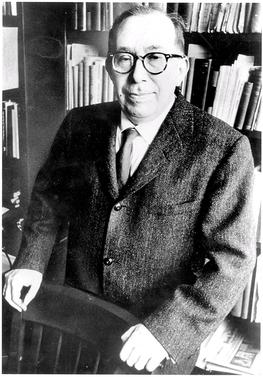
Uncle Leo was all about this dichotomy. "Who's Uncle Leo?" non-loyal followers of my obsessions will ask. Here's Wikipedia's answer:


Leo Strauss (September 20, 1899 – October 18, 1973) was a German-American political philosopher and classicist who specialized in classical political philosophy. He was born in Germany to Jewish parents and later immigrated to the United States. He spent most of his career as a professor of political science at the University of Chicago, where he taught several generations of students and published fifteen books. Originally trained in the Neo-Kantian tradition with Ernst Cassirer and immersed in the work of the phenomenologists Edmund Husserl and Martin Heidegger, Strauss later focused his research on the Greek texts of Plato and Aristotle, retracing their interpretation through medieval Islamic and Jewish philosophy, and encouraged application of their ideas to contemporary political theory.
Here's my answer:


Magneto: (October 26th, ~1930-) A German-American mutant and political dissident, Magneto (born Max Eisenhardt) had the ability to generate and control magnetic fields. He was born in Germany to Jewish parents and later immigrated to the United States. Magneto created a lair known as "Asteroid M," an orbital base of operations where he taught several generations of mutants and created numerous weapons designed for world domination. Magneto was self-educated in his "neo-human" or "Mutant" abilities, but later became fully immersed in his powers under the tutelage of then friend and later archenemy Charles Xavier. Magneto interpreted the rise of mutant powers as implying the superiority of mutants over ordinary humans, and encouraged the application of mutant powers and oppression of ordinary humans in contemporary political action.

Ain't that the best? Strauss was a German-Jewish intellectual in Europe in the 1930s and '40s, and the atrocities of the Holocaust obviously weighed heavily on him. His essay On German Nihilism from 1941 depicts a man trying to make sense of the deeply irrational -- the rise of German Nationalist Socialism (his preferred term for the Nazi's in the essay) and the ensuing Holocaust. Taking a cue from Nietzsche and his idol Heidegger, Strauss professed that the problem was "Nihilism." It was the lack of common values, supposedly, that let Germany be taken over by the first asshole with a to-do list. Hitler was the Nihilist in the right place at the right time.

Last words before his suicide: "Whätever."

Nihilism, to be as technical as possible, is "not giving a shit." Life becomes meaningless on an individual level. Nihilism, when extrapolated, also causes society's fabric to get wrinkled because there is not a common set of values/group identity. This is dangerous, because if you're not careful a tyrant might come a long and turn that fabric into something awful, like an orange Zoot Suit or something. Strauss, with good reason, wanted to stop this from happening (again).

The official leisure suit of National Socialism
jk Charlie ;)

Below are two solutions to the "problem of Nihilism." 

I'm not sure who Dr. X represents in this analogy.
Maybe just Patrick Fucking Stewart.


LIBERALS

One side's got people like Kierkegaard and Joseph Campbell and Dr. Xavier on it. Let's call them "Liberals." From this perspective, the solution to Nihilism comes from facing the abyss of Nihilism head on, as an individual and not as part of a group that "has all the answers." Whether that means praying, meditating, going to therapy, sharpening your reasoning faculty unto the transcendence of reason itself, the idea is to build a strong, indestructible yet very fluid sense of "Self." In Indian Vedanta terms, the goal is to discover the formless "Atman," the source of all power, strength and creativity that exists deep within every individual.

NASA Photo of the "Abyss of Nihilism"

"Life has no purpose." That's the place where the true Liberal starts, the Liberal doesn't begin with any dogma or preconceptions. As the Buddha said: "Believe nothing, no matter where you read it or who has said it, not even if I have said it, unless it agrees with your own reason and your own common sense."
Søren Aabye Kierkegaard
We should obviously just pick
our role models by their looks
What existential tortures will occur when this possibility is authentically faced! Kierkegaard talked about the great pain that comes when the illusions of life are ripped from us, he called this "leveling." The result of leveling is "becoming a true self," (From Sickness Unto Death). As Joseph Campbell said, you must "follow your bliss," (the italics are mine). I call this the mystical path of "not being a pussy."

From this prospective, society should be designed to enable the full individualization of every member. It seems counter-intuitive, because it seems like these citizens would just be "thinking about themselves," but in practice it gives people a stable ground from which to engage in society in a healthy way. Without this stable ground, we project our own fears and anxieties onto the world and help hardly anyone. This type of society is called the "Open Society."


VALUES OF THE OPEN SOCIETY:
Tolerance, Individuality, Liberalism and a lack of Authoritarian Control, Separation of Church and State, Free Speech, Freedom of Religion, Freedom to Overthrow Unjust Leaders.

Henri Bergson first coined the phrase "The Open Society" in the early 20th Century. The idea was then famously developed by Karl Popper in his book The Open Society and its Enemies. Popper's aim was clearly to wrote the manifesto for Liberalism. His attempt was stalled by one critical flaw: the book sucks. Strauss was not far from the truth, for once, when he said: 
 Popper is philosophically so uncultured, so fully a primitive ideological brawler, that he is not able even approximately to reproduce correctly the contents of one page of Plato. Reading is of no use to him; he is too lacking in knowledge to understand what the author says.
In the preface of Open Society Popper explains that he is a scientist, not a philosopher. Yeah, it shows. So maybe The Book on Liberalism has yet to be written. So what's the other end of the spectrum? Let's call them:
SHEEP
"Wait, Sheep? That's a loaded term!" And you know what, you're right! That's why I'm blogging and not going to Grad School. So an important thing to keep in mind here is that "Liberal" and its usual counterpart "Conservative" lose their normal meanings in contexts like this. Strauss defines Liberal in a way which is completely unrelated to modern "political liberalism." Liberals are, according to Strauss, "cultured." He uses the original use of "Liberal," in "Liberal education," to mean "free." Free in the sense of being masters, and not slaves. Liberated and not in bondage. Remember that harsh dichotomy!

Allan Bloom is another fugly old man I want to draw to draw some attention to.

"Will the real Leo Strauss please stand up?"

Bloom published a bestseller in 1987 called The Closing of the American Mind. Bloom is probably one of the most notable "Straussians," though he was not directly a student of the man. The book is a scathing assault on modern education that deigns to call itself "Liberal Education." We can consider this book as an attempt to answer the question of "Nihilism." I think it makes some great points. Here's a pull quote that I stole from the Wiki page on the book:
Education in our times must try to find whatever there is in students that might yearn for completion, and to reconstruct the learning that would enable them autonomously to seek that completion.
That'd be great! That's basically what I said "Liberals" aim for. And if this was the extent of the "Sheep" solution to Nihilism then there wouldn't even be a spectrum to talk about. The real difference is that the "Sheep" solution does not in practice demonstrate a belief that most people can "autonomously... seek that completion." The Sheep actually seem skeptical that anyone can attain that completion.

Check out this quote from Strauss' 1959 address at U Chicago entitled What is Liberal Education:
Plato, coy as fuck as always.
We have heard Plato's suggestion that education in the highest sense is philosophy. Philosophy is quest for wisdom or quest for knowledge regarding the most important, the highest, or the most comprehensive things; such knowledge, he suggested, is virtue and is happiness. But wisdom is inaccessible to man and hence virtue and happiness will always be imperfect. In spite of this, the philosopher, who, as such, is not simply wise, is declared to be the only true king; he is declared to possess all the excellences of which man's mind is capable, to the highest degree. From this we must draw the conclusion that we cannot be philosophers -- that we cannot acquire the highest form of education.
Those influenced by Strauss'
Political conclusions are often
identified as "Neo-cons," though
their actual exposure to his writing
is often dubious.


"Alright, so whaddafuck? Why can't I have the highest form of education? Why can't I be a philosopher? Wait... is the philosopher even real? And yo, Uncle Leo, how do you know that 'wisdom is inaccessible to man'? I thought you were teaching me something but now I feel like I know less than before. Heeey... is that the point?"

I don't think you'll get any satisfactory answers to any of those questions from anyone who is authentically labelled a "Straussian." And that may well be "the point." These types are usually into concepts like "aporia," which means "lack of a path." To know that you don't know in an authentic way, that's when "wisdom" if possible is possible. That sounds like a pretty scary thing to realize. It sounds like what I said "Liberals" do when they face the "Abyss of Nihilism" as an individual.  And it is the same thing, but The Sheep (by my definition) resist embracing the truth.


The Sheep make a distinction that The Liberals don't, and here's where the real division between them shows up. The Sheep don't think everyone is capable of realizing their ignorance in this profound Socratic way, and in acknowledging their ignorance The Sheep are in a sense the Elite. Here's some more Strauss from that same essay:
I'm not hurting you, the metal
I'm crushing your body with
is hurting you.

Democracy in a word is meant to be an aristocracy which has broadened into a universal aristocracy... Liberal education is the ladder by which we try to ascend from mass democracy to democracy as originally meant. Liberal education is the necessary endeavor to found an aristocracy within democratic mass society. Liberal education reminds those members of a mass democracy who have ears to hear, of human greatness.
So it's not clear if he's saying that "cultured" and "liberated" people are going to naturally arise to positions of power, or if we have a moral injunction to place them there by any means. The idea is that "Liberally Educated" people are more virtuous and therefore better able to decide what the values of society should be. If he is just saying that they will naturally rise to positions of power, then why is he saying anything at all? It'll just happen. 

This over simplifies his argument, but he seems to basically be saying that people with a classical liberal education are "entitled" to be in power because they are wise for knowing their ignorance.

Anyway, why are they "Sheep"? Well because they do not claim to be wise themselves, but they are in contact with those who are wise. Though they're Sheep, they have a Shepherd, and at least they're not wild ass goats. This is the move that all who claim authority must take, giving up their humanity to rule and oppress those they feel are "even less than human." From the same essay by Strauss:
We cannot be philosophers but we can love philosophy; we can try to philosophize. This philosophizing consists at any rate primarily and in a way chiefly in listening to the conversation between the great philosophers or, more generally and more cautiously, between the greatest minds, and therefore in studying the great books. 
Oh you pious dude, you. "I'm no philosopher, I'm just a silly book lover. BUT AT LEAST I READ BOOKS!" Is the subtext I read, "SO I AM ENTITLED TO RULE THE NON-BOOK READERS." Like, what crazy un-sane shit this is when you really think about it. But academia is rife with this! And of course it is, everyone has their biases. Strong people, pretty people, tall people, funny people, they all feel they have a God-given privileged to get what they want because they are different. It's just nuts that highly intelligent and discerning people buy into it.

I call them "Sheep" because they rob themselves from the ability to really know when they claim the right to rule. If Strauss claimed he did "know things" in this profound philosophic way, people could say: "Ok, what's 'The Good?' Why am I so unhappy? How do I make my daughter call me back?" But instead he gains influence as a pseudo-prophet precisely because he says he doesn't know, but he knows some guys who do. There's just enough empowerment and truth in it to get a bunch of disciples and to have your will be done by your own philosophic Sheep for a few generations, but ultimately that's all worth nothing because it comes from fear. I mean, you can't blame him. He was a German Jew in the '30s and '40s, wouldn't that skew your view on humanity a bit? Let's at least address that. But hey, another German Jew (who was actually killed at the hands of the Nazis) maintained her faith in humanity. Is her opinion not relevant because she hadnt't read The Nicomachian Ethics?

Swami Vivekananda: another
good looking awesome person.

Strauss claims in On German Nihilism that the open society is impossible, that moral life is impossible inside the illusion which is The Open Society, and that its ideal of progress are dangerous illusions. Well, there's some good points to that in my opinion, believing in external progress does seem like a waste of time. But that is precisely why The Liberal seeks internal progress, which is helped by serving others. This is contained in Swami Vivekananda's interpretation of Karma Yoga -- the benefit of helping others is that it frees you.

Read this polemical crazy-pantness from Strauss in that '41 essay:


Values of the "Closed Society"
Moral life, it is asserted, means serious life. Seriousness, and the ceremonial of seriousness - the flag and the oath to the flag-, are the distinctive features of the closed society, of the society which by its very nature is constantly confronted with, and basically oriented to, the Ernstfall, the serious moment, M-day, war. Only life in such a tense atmosphere, only a life which is based on constant awareness of sacrifices to which it owes its existence, and of the necessity, the duty of sacrifice of life and all worldly goods, is truly human: the sublime is unknown to the open society.
What crazy-pantsness! But it's helpful to take it seriously and to think about it. The Liberal will look at this Abyss in the face and see what the truth is for themselves. The Sheep will take a teacher's word on it because that teacher claims you aren't good enough to know the truth yourself.

Athens, Jerusalem, and...

Let me get back to that movie poster I started with. The dichotomy between faith and reason is  based on the presumption that a life of "faith" means a life where one submits to the authority of a particular revelation, which stipulates something like Christian humility, or you can believe that your own inner compass and rationality is enough to give you the right to rule others. This is the tension between "Athens and Jerusalem." Can I add another city that no one today would want to travel to into the mix? Calcutta, as a symbol of the the Upanishad's which have a radically different view on this dichotomy (and on dichotomies in general). I hold this city up as a metaphor of the true wisdom, in the highest and most philosophic sense, that The Liberals acknowledge and that The Sheep are suppressing in themselves.

Ramana Maharshi said:
Liberation is our very nature. We are that. The very fact that we wish for liberation shows that freedom from all bondage is our real nature. It is not to be freshly acquired. All that is necessary is to get rid of the false notion that we are bound. When we achieve that, there will be no desire or thought of any sort. So long as one desires liberation... one is in bondage.